Nanoscale bubbles.
Macro-scale performance.
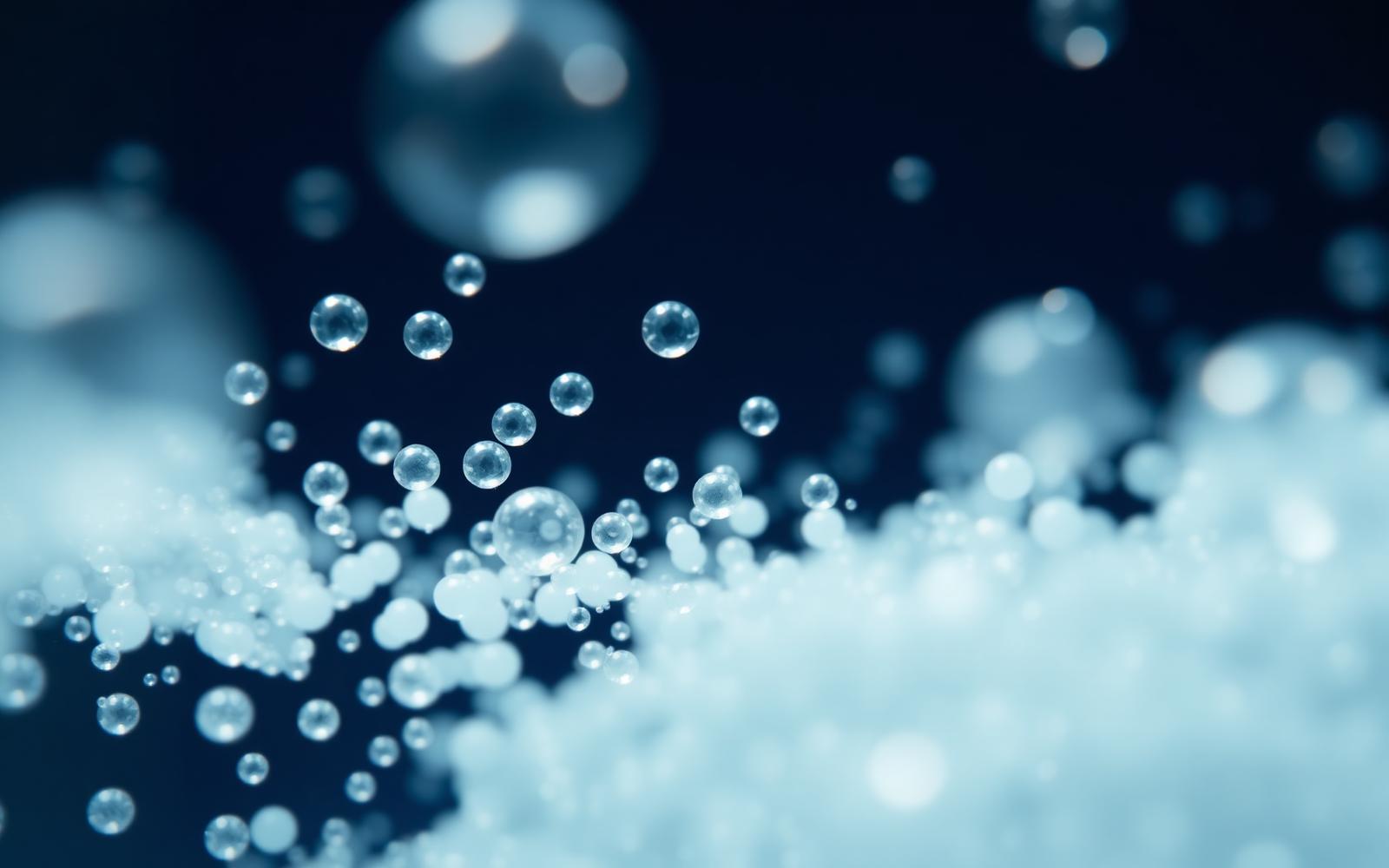
Ultra Fine Bubbles are less than 1 μm in diameter — smaller than a wavelength of visible light. They behave nothing like ordinary bubbles, and that difference is the foundation of everything UFB DUAL does.
A different class of bubble.
1 ml of UFB water contains more than 50 million ultra fine bubbles. Because they're much smaller than the wavelength of visible light, they're invisible to the eye — but their effect is measurable and dramatic.
Three physical mechanisms behind every UFB advantage.
Zeta Potential — Uniform Dispersion
Why UFB keeps particles evenly separated.
The surface of an Ultra Fine Bubble carries a negative zeta potential of −30 to −40 mV. Placed between abrasive particles or contaminants, this creates strong electrostatic repulsion, preventing agglomeration and delivering uniform, defect-free performance — from polishing slurry to detergent surfactants.
- Prevents abrasive particle clumping
- Eliminates localised polishing irregularities
- Attracts and adheres to oils, dirt, and fine particles
Breaking the Leidenfrost Barrier
Why UFB can cool where water alone cannot.
At high polishing or machining temperatures, water forms an insulating vapour layer (the Leidenfrost effect) that blocks efficient cooling. With an internal pressure of ~20 atm, Ultra Fine Bubbles physically penetrate this vapour barrier. As they collapse, they absorb heat through vaporisation — direct cooling exactly where it's needed.
- Internal bubble pressure ~20 atmospheres
- Direct cooling of the polishing / machining surface
- Cushions impact — protects delicate gemstones and tooling
The Jack-Up Cleaning Effect
Why UFB reaches dirt chemistry cannot.
Ultra Fine Bubbles smaller than 100 nm penetrate deep beneath contaminants trapped in microscopic gaps. They accumulate, expand, and physically lift the dirt from below — the jack-up effect — releasing it without harsh alkaline detergents or chemical damage.
- STEP 1: Nano-level penetration beneath the contaminant
- STEP 2: Bubble expansion and accumulation in the gap
- STEP 3: Physical lift and release — no chemical damage
Conventional systems vs. a UFB-integrated environment.
| Evaluation Criteria | Conventional Water + Chemicals | UFB DUAL Integrated Environment |
|---|---|---|
| Cleaning Power & Penetration | Contaminants remain on the surface | Penetrates ultra-fine gaps and removes dirt at the source |
| Grinding Efficiency & Precision | Higher risk of scratches, inconsistent results | Continuous self-acting dispersion maintains grinding performance |
| Safety for Materials | Risk of damage from chemicals or heat | Physical, adsorbed cleaning — safe and gentle |
| Work Environment | Manual cleaning, exposure to chemical odours | No chemicals, no odour, clean and safe environment |
| Environmental Load & Cost | High cost of detergents, waste, tool wear | Lower detergent, waste, and tool wear costs |
Generated from water pressure alone.
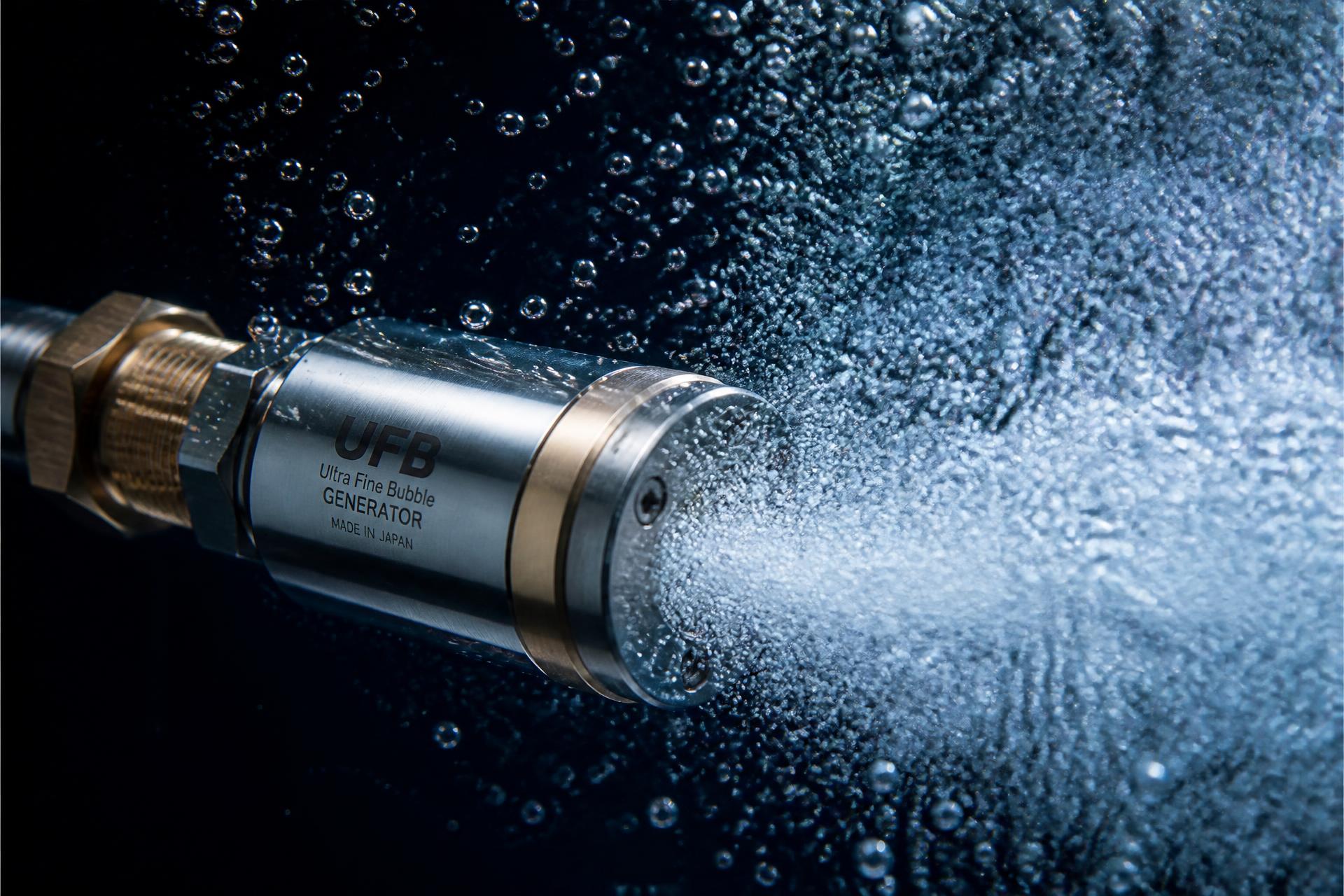
UFB DUAL uses a proprietary internal geometry to induce controlled cavitation as water flows through the nozzle. It draws no external air, uses no pump, and requires no power. The bubbles are generated from the air already dissolved in the water — a completely sealed, contamination-free process.
See how UFB performs in your industry.
From hotels to semiconductor fabs — the same technology, tuned to your process.